
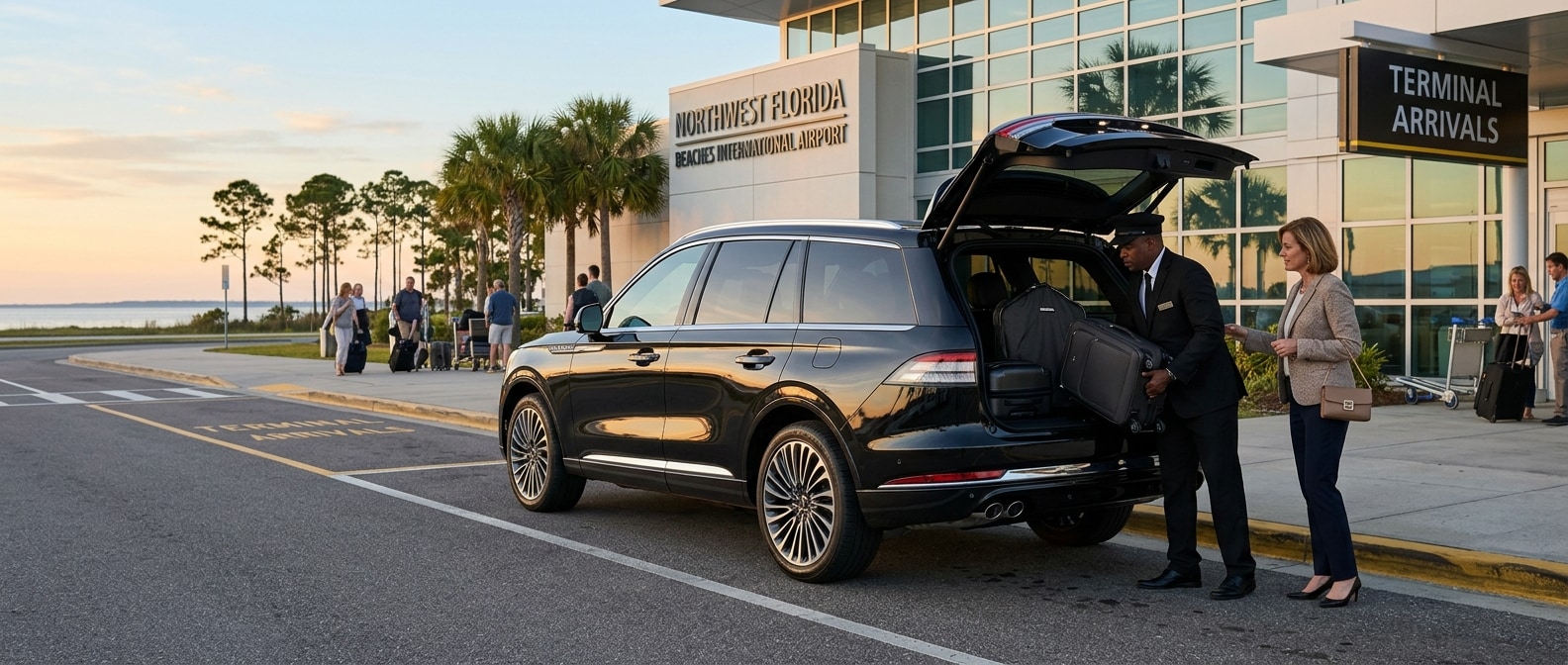
If you've done the research and the Aviator is your vehicle, the next question is the one that actually matters. Do you lease it, or do you finance it outright? The answer depends on how you drive the Panhandle, not on generic advice written for someone in Ohio.
The 2027 Lincoln Aviator is a capable three-row luxury SUV with a 400-horsepower twin-turbocharged 3.0-liter V6, a cabin that keeps road noise out, and a safety suite that NHTSA rated five stars overall. Our team at Bay Lincoln has walked plenty of Bay County families and coastal professionals through this exact decision, and what follows is the breakdown without the spin.
The short version
- Leasing puts you in a new Aviator every two to three years with lower cash commitment upfront, but mileage caps are real and Panhandle driving can eat through them faster than you expect.
- Financing builds equity and gives you no mileage ceiling, which matters if your life includes regular ECP airport runs, drives up US-231 toward Marianna, or weekend coastal trips.
- The 2027 Aviator is available in three trims (Premiere, Reserve, Black Label), and your financing path can influence which trim actually makes sense to configure.
- Lincoln Financial Services offers both conventional financing and lease programs; incentives shift monthly, and current programs are worth asking about before you commit.
- Neither route is universally better. The right answer is the one that matches how long you keep vehicles, how many miles you put on, and how much equity matters to you.
What's the Real Difference Between Leasing and Financing the Aviator?
The core split comes down to ownership, and it quietly decides how every other number behaves, since financing hands you the Aviator outright once the term closes while leasing only has you covering the slice of value you use before the vehicle goes back. Finance, and it's yours at the end. Lease, and you return it unless you buy it out.
| Decision Factor | Leasing | Financing |
|---|---|---|
| Ownership at term end | No (return or buy out) | Yes |
| Upfront cash required | Lower | Higher |
| Monthly commitment | Lower (you pay depreciation, not full value) | Higher (you pay toward full value) |
| Mileage ceiling | Yes (typically 10,000-15,000 mi/year) | None |
| Customization / modifications | Restricted | Unrestricted |
| Vehicle equity built | None | Yes |
| End-of-term flexibility | Return, re-lease, or buy out | Keep, sell, or trade |
| Salt-air wear responsibility | Dealer absorbs at return (within limits) | Yours to manage |
| Access to new model cycles | Every 2-3 years | When you choose to trade |
The single deciding factor for most Bay County drivers we talk to is mileage. If your annual total is consistently below 12,000 miles, leasing is mathematically cleaner. If it climbs above that because of coastal corridor driving or regular runs to ECP, financing removes a cost variable that can sting at lease return.
How Much Do Panhandle Driving Patterns Actually Affect the Numbers?
Panhandle mileage moves the math more than buyers expect, and the national comparison guides never touch it, which is where Bay County drivers find the advice they read online was written for a different map. Our finance team walks through this at the desk.
Check the week you actually drive before you sign anything. The coastal corridor along US-98, the Hathaway Bridge approach into Panama City Beach, and the run up US-231 toward Marianna are real miles. Add a few round trips per month to Northwest Florida Beaches International Airport in West Bay (ECP is roughly 15 miles from Downtown Panama City), errands on both sides of the Bay, and school-run logistics for a family spread across town, and 12,000 annual miles vanish before you notice.
The EPA rates the rear-wheel-drive 2027 Aviator at 17 city / 25 highway / 20 combined MPG, and the AWD configuration at 17 city / 24 highway / 20 combined. Those figures shape operating cost on either path. They bite a little harder under a lease, because you're paying for fuel on miles you can't afford to run past the cap.
Our read is simple. If a driver tells us they stay under 12,000 miles a year without fudging it, a lease is a sharp option. If they hesitate, or a beach house keeps pulling them down 30A on weekends, we lean toward financing. Leasing isn't a trap. Overage charges at lease return are the kind of surprise nobody wants.
Explore Financing Options at Bay Lincoln
The Trim Angle: How Your Finance Route Changes the Aviator You Actually Drive
The 2027 Aviator arrives in three configurations, and which one fits you depends on how you'll live with the vehicle, since your finance path can nudge you up or down the range based on how long you plan to keep it. The sticker is only part of the picture.
The Premiere is the entry point, and it's far from spartan. Lincoln makes BlueCruise hands-free highway driving assist standard (with a four-year connected services subscription), along with heated and ventilated front seats, the 13.2-inch center display with Google Built-in, a 14-speaker Revel audio system, eight USB ports, and an AC outlet. A lot of equipment sits there before you add a thing. The Reserve layers on a panoramic Vista Roof, ambient interior lighting, wireless charging, and leather seating surfaces. The Black Label steps up to 30-way Perfect Position front seats and a 28-speaker Revel Ultima 3D audio system, plus exclusive design themes.
The finance route intersects right here.
| Trim | Strong Lease Case | Strong Finance Case |
|---|---|---|
| Premiere | Lower monthly, access to full safety suite and BlueCruise without a long ownership horizon | Best equity baseline; if you keep vehicles 6+ years, the value holds |
| Reserve | Panoramic Vista Roof and Reserve extras on a predictable term | The right choice if you'll personalize it or use it as a primary family vehicle for years |
| Black Label | Harder to lease efficiently given its position at the top of the range | Ownership position makes the premium features tangible over a longer period |
If you're cross-shopping with the Navigator at this stage, that's a separate conversation, and one worth having before you sign anything on a lease.
Practicality on the Lot: What Changes Either Way
A handful of the Aviator's traits stay fixed no matter which route you pick, and they're worth knowing before you finalize, from cargo volume to towing to a suspension that behaves the same whether the payment book reads lease or loan.
Cargo behind row three measures 19.2 cubic feet. That figure is real, not a generous interpretation. It swallows a weekend's luggage for two adults with room to spare, and it handles a family of five's beach-day gear if you pack with a plan. The PowerFold third row drops flat from a cargo-area button, which earns its keep when row three sits empty and you're loading anything taller than a soft-sided bag. Towing on a properly equipped 2027 Aviator reaches 5,000 pounds, enough for a small boat or a single-axle utility trailer.
On our lot, salt air is the constant we plan around, and it's why the underbody and door seals reward a quick rinse after beach runs, lease or finance.
The adaptive suspension comes standard across every trim. It reads the road surface and adjusts on the fly, and across the Panhandle's mix of smooth coastal highway and rougher inland two-lane, you notice it working.
"NHTSA and IIHS award the Aviator with top crashworthiness scores." (carsdirect.com, citing NHTSA and IIHS evaluations of the 2027 Lincoln Aviator)
One limitation worth stating flat out is fuel economy. In this class it isn't a reason to buy. The EPA's combined estimate is 20 MPG for the 2027 Aviator. Competitive within the three-row luxury segment, sure, but if economy is your first filter, this is the wrong category entirely. Saying it plainly beats burying it.
So Which Route Should You Take?
Neither route wins outright, so the answer tracks your habits more than the brochure, with financing rewarding high or unpredictable mileage and long ownership while leasing suits steady low miles and a taste for the newest model on a fixed term. Here's how the map looks for the buyers we see across Panama City and Lynn Haven.
Lease fits you if: You like driving a new vehicle on a predictable term. You put fewer than 12,000 miles per year on a vehicle without straining. Handing the long-term salt-air maintenance question back to the next owner (here, Lincoln Financial) has real appeal. You want the Premiere or Reserve with a defined monthly commitment and no residual responsibility beyond normal wear.
Finance fits you if: You drive more than 12,000 miles per year, or your mileage swings. You keep vehicles for six or more years and the equity position matters to you. You want to modify, personalize, or add accessories without restriction. You're building the Reserve or Black Label the way you want it and you intend to keep it.
The overlapping case: Bay County second-home owners and established professionals who carry the Aviator as one of two household vehicles often find the lease attractive precisely because the total annual mileage on this specific vehicle stays manageable. That profile fits a lease well.
Our team's job is to show you the actual numbers for your actual situation. We're not here to steer you toward whichever program carries a better commission structure. Bring your annual mileage estimate and a straight read on how long you typically keep a vehicle, and we'll build both scenarios side by side.
View current 2027 Aviator inventory at Bay Lincoln, and come in ready to talk through both paths.
Frequently Asked Questions
What is the mileage limit on a Lincoln Aviator lease?
Lincoln Automotive Financial Services typically offers lease contracts with annual mileage options of 10,000, 12,000, or 15,000 miles. The exact options and any associated per-mile overage rate are disclosed in the lease agreement and vary by current program. If your Panhandle driving puts you above 12,000 miles per year reliably, our team generally recommends discussing financing instead to eliminate that variable entirely.
Can I buy out my Aviator at the end of a lease?
Yes. Lincoln lease agreements include a purchase option at the end of the term. The buyout figure is set at lease signing (as the residual value), so you'll know the number before you drive away. If you reach the end of your term and find you want to keep the Aviator rather than returning it, that path is available. Our finance team can walk you through how a lease buyout compares to financing a new model at that point.
Should I lease or finance if I'm unsure about my annual mileage?
If your mileage is variable or you expect it to exceed 12,000 miles per year, financing is the safer choice. Overage charges at lease return can add up fast, and financing removes that penalty structure entirely. Our team can help you estimate your real-world Panhandle driving patterns and model both scenarios before you commit.
Categories:
Social