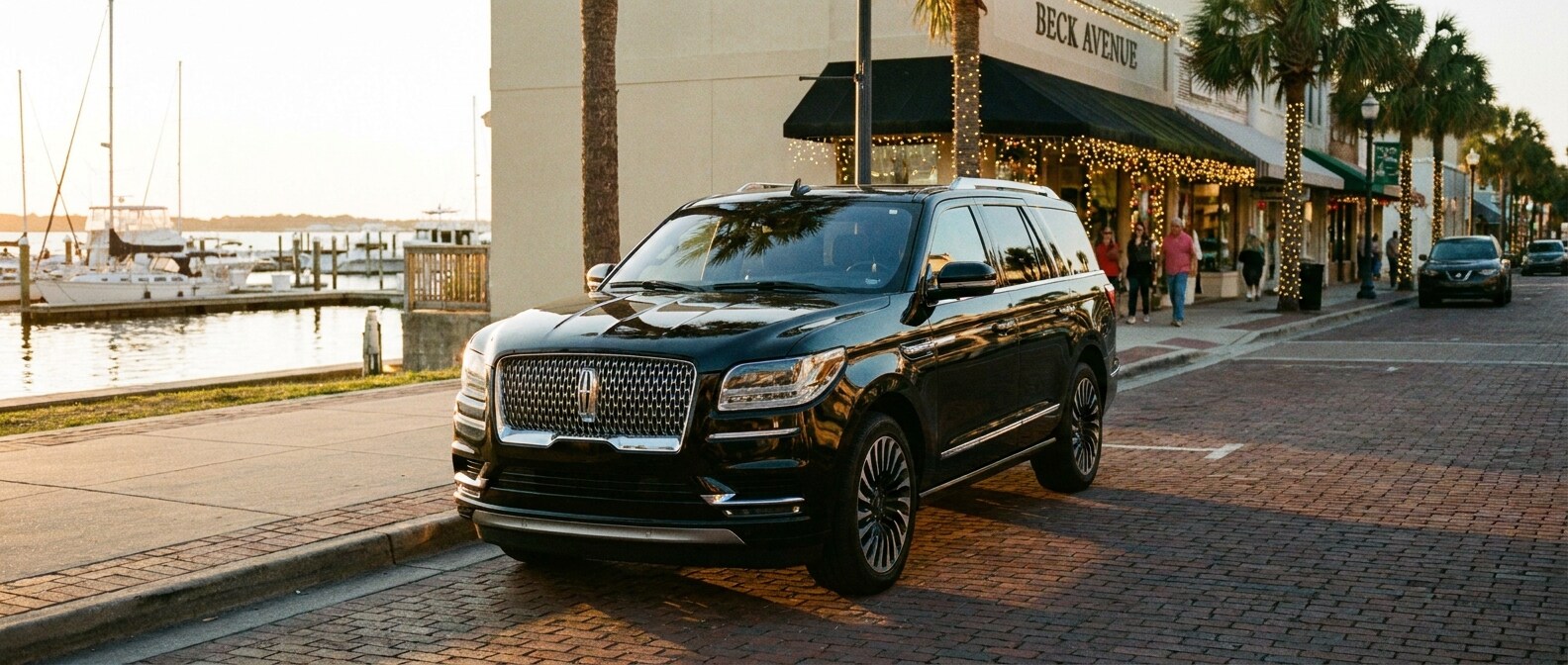
It does. The standard Navigator L 2027 Navigator L runs 221.9 inches bumper to bumper, carries a 27.8-gallon fuel tank, and tows up to 8,700 pounds when properly equipped. Five months of Gulf Coast heat and coastal salt air have already done real work on the battery, the cabin air filter, and the undercarriage. Before holiday runs down Beck Avenue and across St. Andrew Bay, four checks are worth making on a vehicle this size that a generic national checklist simply doesn't cover.
Which Maintenance Items Matter Most on the Navigator L Before the Holiday Season?
The items that matter most are the ones where the L's size and Bay County's coastal conditions overlap, and several of them show up on any maintenance list; the ones below simply carry extra weight on a vehicle that sees salt air, high humidity, and a full hurricane season's worth of hard starts before November even arrives. Some are routine. The coastal weighting is what changes them.
| Maintenance Item | Why It Matters on the Navigator L | What to Expect |
|---|---|---|
| Battery load test | Heat cycles and salt-air terminal corrosion shorten effective service life here faster than in drier markets | A clean load test takes minutes; a failed one on a cold December morning takes your whole day |
| Cabin air filter | The L's cabin filtration works harder than a national mileage interval assumes in coastal humidity | Inspect visually; a gray or compressed filter in a Bay County vehicle is often well past its useful life |
| Undercarriage inspection | Brake lines, connectors, and suspension hardware sit closer to corrosion risk here than inland | Early surface corrosion is cheap to address; late discovery is not |
| Brake fluid check | Humid coastal air accelerates moisture absorption in brake fluid over a full season | Dark or murky fluid in the reservoir is the signal to act before winter travel |
| Tire inspection | 221.9 inches of vehicle on wet Bay County roads in December demands confident rubber | Below 2/32 of an inch of tread depth, wet stopping distances increase sharply |
| Wiper blades | Salt film hazes wiper rubber; a 27.8-gallon tank means long highway legs where visibility matters | Test on glass at highway speed, not in the driveway |
Worth naming plainly, the Navigator L is a large vehicle. At 221.9 inches overall, it isn't the pick for someone who wants the tightest spots on Beck Avenue without a plan. Fair enough. What it offers a Historic St. Andrews household is room for a full third row, 37.4 cubic feet of cargo behind them, and enough capability to tow a bay boat when the season calls for it. For the family that uses all of that, the maintenance investment before the holidays earns its keep.
View Current Navigator L Specials
What Does the Salt Air Near St. Andrews Bay Actually Do to These Systems?
Our service team sees the same pattern on vehicles that live and park near the water, where Gulf Coast humidity and airborne salt make for a different maintenance environment than the national schedules assume, and it isn't dramatic and doesn't mean the vehicle's fragile. It just means the intervals run shorter.
The cabin air filter is the clearest example. Lincoln's general recommendation runs roughly every 20,000 miles. In a vehicle that parks within a mile of St. Andrews Bay year-round, that interval's a ceiling, not a guarantee. Salt air and high humidity load the filter media in ways mileage alone doesn't capture. A visual inspection before the holiday season costs nothing and saves a full replacement on a schedule you didn't choose.
Along the same lines, the battery carries a similar story. Florida heat accelerates internal cell degradation, and salt air works on the terminals. Neither problem announces itself until it becomes a no-start on a cold December morning when you're heading to the marina or picking up family at ECP. A load test early in the holiday season heads that off.
Browse our current Navigator L inventory
How Does the Navigator L's Size Factor Into Holiday Driving Around Historic St. Andrews?
The standard Navigator is worth a look if most of your holiday driving stays inside Historic St. Andrews, because at 221.9 inches the L isn't a hard vehicle to drive so much as one that rewards a deliberate approach to parking in a historic neighborhood where the streets and lots predate the full-size American SUV. It fits. It fits with intention.
Beck Avenue sits in the Historic St. Andrews district of Panama City. Pull-through spots when they're open, the outer rows of the marina parking area, and the larger surface lots one block back from the main strip are the practical moves. If the household splits time between holiday runs up US-98 toward Lynn Haven and casual Saturday mornings in the neighborhood, the L's 37.4 cubic feet behind the third row and 121.6 cubic feet with both rows folded make a genuine case for the longer body. If most trips stay short and local with light loads, the standard Navigator covers them without the extra length.
A fair tradeoff, and worth settling before December.
What Should I Do Before My First Long Holiday Drive in the Navigator L?
Before the first long holiday drive, the short list is tire pressure, wipers, lighting, and fluids, because the season in Bay County often means longer runs than the usual commute, whether that's US-98 east toward the 30A communities, US-231 north toward Marianna, or a full weekend with a loaded third row and cargo behind it. The 27.8-gallon fuel tank means fewer stops. The twin-turbo 3.5L V6 putting out 440 horsepower and 510 lb-ft of torque makes the highway legs feel easy. What the engine won't do is make up for maintenance that was skipped before the trip.
The pre-trip checklist for a long holiday drive runs shorter than the full seasonal service, but it still matters:
- Tire pressure and tread depth (cold morning pressure drops are real on December Panhandle mornings, even mild ones)
- Wiper blades at highway speed on wet pavement
- All exterior lighting, especially the rear lights on a vehicle this long when towing
- Fluid levels (brake, coolant, and washer fluid)
All of it matters more on a 221-inch vehicle carrying eight passengers on a holiday run than on a commuter crossover making a ten-minute trip. None of it takes long.
Frequently Asked Questions
Does the 2027 Lincoln Navigator L need winter maintenance in Panama City, FL?
Not the way a vehicle in a northern climate does. There's no road salt, no ice prep, and no block heater to worry about. What the Navigator L does want is a post-hurricane-season review before the holidays, and that means a battery load test after five months of Gulf Coast heat and salt-air exposure, a cabin air filter inspection (coastal humidity loads it faster than national mileage intervals assume), an undercarriage check for surface corrosion on brake lines and connectors, and a brake fluid check. Those are the items that make a difference here, and the ones a generic national checklist will underweight for Bay County conditions.
How often should I replace the cabin air filter on my Navigator L near Historic St. Andrews?
Lincoln's general recommendation runs roughly every 20,000 miles, but that interval was written for average conditions. Near St. Andrews Bay, with year-round humidity, salt air, and Gulf Coast pollen all working on the filter media, a visual inspection every six months beats waiting for the mileage marker. A gray or compressed filter on a vehicle that lives near the water is a reliable sign the interval's already passed, whatever the odometer says.
Does the Navigator L fit in Historic St. Andrews parking?
It fits. At 221.9 inches overall, the Navigator L is a large vehicle, and Historic St. Andrews was laid out before vehicles this size were common. The practical approach is a deliberate one, favoring pull-through spots, the outer rows of the marina-area lots, and the larger surface lots one block back from Beck Avenue over tight parallel spaces. For the household that uses the L's full capability (37.4 cubic feet behind the third row, up to 8,700-pound towing capacity, seating for eight), the extra care in parking is an easy trade.