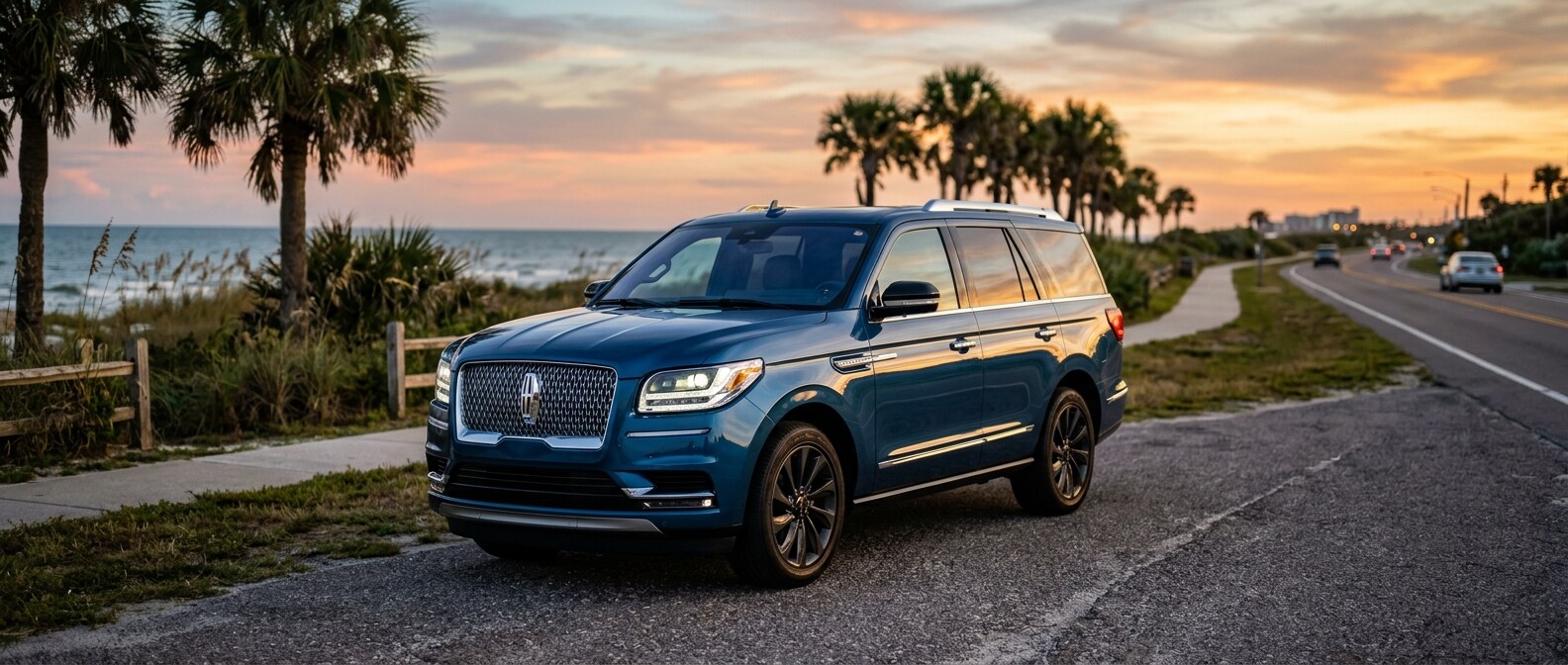
Holiday season shows up differently on the Panhandle. No hard freeze, no road salt, no snow tires. What you do have is a 2027 Lincoln Navigator carrying the residue of five months of subtropical heat, Gulf-driven humidity, and salt-laden air through every seal, every connector, and every inch of cabin filtration before your family packs it for Thanksgiving and Christmas travel.
All of that matters. The checklist somebody writes for Ohio drivers in November doesn't apply here, and running it unchanged is how a well-maintained Navigator catches you out at the worst possible moment.
Our 2027 Navigator inventory is updated regularly if you're also weighing a switch, but this post is for owners who already have one and want it performing at its best through the holidays.
What Goes on the Checklist?
A Navigator going into the holiday season on the Gulf Coast needs attention in eight specific areas, and if you run each one before mid-December you'll have covered the system-level risks our climate actually creates rather than the ones a northern winter list is built around. Everything below is there for a Panhandle reason.
The 2027 Lincoln Navigator Holiday Maintenance Checklist
- [ ] Battery load test (not just a visual check)
- [ ] Cabin air filter inspection and replacement if needed
- [ ] Undercarriage inspection for salt-air corrosion on brake lines and connectors
- [ ] Brake fluid condition check
- [ ] Tire pressure (all four plus spare) and tread depth
- [ ] Engine air filter inspection
- [ ] All exterior lighting confirmed operational
- [ ] Wiper blade check; washer fluid topped to full
- [ ] Towing equipment inspection (if you're pulling a trailer this season)
- [ ] Door and cargo-area seal conditioning
Print it, walk it once, bring it in.
Why Each Item Earns Its Place
Each item on this list earns its spot because of something particular the Gulf Coast climate does to it, and that's where our approach diverges sharply from the generic November checklist a driver up north would reach for without a second thought. Our Our service team works through these exact items differently here, and knowing why makes you a sharper advocate for your own vehicle.
Battery. Florida heat and coastal salt air form a specific combination that shortens battery service life compared to temperate climates. The heat accelerates internal degradation; the salt air works on the terminals. A battery that entered June at full charge may have lost significant capacity by November without ever once failing to start. A load test tells you the actual reserve capacity. A visual check of the terminals tells you nothing about the battery's internal state. If the battery is approaching three years old in this climate, test it early, before the holidays rather than after the first cold snap drops overnight temps into the low 40s.
Cabin air filter. The Navigator's cabin air filtration works harder here than the owner's manual interval assumes. Gulf humidity sits in the high 70-percent range essentially year-round, and salt air travels inland on Gulf breezes. Those two stressors load the filter media with salt particles, moisture, and mold-friendly conditions an inland filter never sees. A filter that might reach 15,000 miles in a dry climate can hit its effective limit well sooner in Panama City driving. Inspect it now, because a musty smell from the vents is a reliable signal it's already past due.
Undercarriage and brake lines. Salt air moves through engine compartments and along undercarriage components constantly when you live near the Gulf. Brake lines, electrical connectors, and suspension hardware are the specific areas worth a close look, and on our service drive they're among the first places we check on a coastal Navigator because corrosion surfaces there before it surfaces anywhere else. None of this is catastrophizing. Coastal ownership carries a genuine maintenance reality, and catching surface corrosion early is cheap insurance.
Brake fluid. Brake fluid is hygroscopic, meaning it absorbs moisture from the air over time. High coastal humidity accelerates that absorption faster than a dry climate manages in the same window, and degraded brake fluid runs a lower boiling point, which matters most under hard stops. Have the condition checked if you haven't had it serviced in 18 months or more.
Tires. The Navigator's 4x2 Premiere starts at rear-wheel drive standard, with intelligent 4WD available as an option. Either way, tires matter on wet Panhandle roads from November through January, when Gulf squalls arrive without much notice. Check pressure across all four (the Navigator's fuel tank holds 27.8 gallons and the vehicle weighs close to three tons, so underinflation has real consequences for handling and fuel use). The Navigator is heavy and thirsty, and no checklist changes either fact. Confirm tread depth while you're under there.
Wiper blades. UV degrades rubber faster on the Gulf Coast than in northern climates. Blades that looked fine through the dry season can streak badly once November rain arrives. Test them on a wet windshield before dark.
Towing equipment. If you're using the Navigator's available Heavy-Duty Trailer Tow Package this season, the trailer brake controller, hitch ball, and coupler all deserve a visual inspection. The 4x4 configuration with that package reaches 8,700 lbs of towing capacity when properly equipped. Confirm trailer wiring is functional (brake lights, turn signals) before the first trip rather than during it.
The Navigator L adds wheelbase and additional cargo capacity for families who pack for a week. If you're towing and carrying at the same time, the L's proportions matter more than the badge.
| Item | Why it matters on the Gulf Coast |
|---|---|
| Battery load test | Heat + salt-air corrosion shorten effective service life here |
| Cabin air filter | Salt air and high humidity load the media faster than inland climates |
| Undercarriage check | Salt air accelerates corrosion on brake lines and connectors |
| Brake fluid condition | Hygroscopic fluid absorbs moisture faster in high-humidity environments |
| Tire pressure and tread | Gulf squalls and wet roads demand full tread depth in winter months |
| Wiper blades | UV exposure degrades rubber faster in coastal subtropical conditions |
| Seal conditioning | Salt air and humidity degrade gaskets and door seals over a full season |
US-98 Before the Holidays: The Run That Tells You Everything
One drive puts a Navigator through nearly every system at once, and it's the westbound run on US-98 from Panama City toward Panama City Beach, bridge crossing and coastal exposure included, the kind of mixed load that'll surface a weak battery or a tired wiper long before the interstate ever does.
Take that drive deliberately before you commit to a long holiday trip. Load the Navigator with the people and cargo weight you'd actually carry. Use the climate control at the setting you'll run on the road. Run the wipers if it's raining. Notice whether the vehicle rides, steers, and brakes the way it should.
A properly serviced 2027 Navigator on that stretch should feel settled, quiet, and responsive. If anything pulls, vibrates, or sounds different than it did before summer, the vehicle's telling you something. Better before the drive to Marianna than during it.
Browse our current Lincoln lineup if you're also thinking about an upgrade before the holidays.
The Print-and-Go Recap
Bring this list to your service appointment or walk through it yourself first, and either way handle it before the first long holiday drive, because the distance between a mild-feeling November and a Navigator that's quietly overdue is exactly the gap this list is meant to close.
Before mid-December, confirm:
- Battery load-tested (not just visually inspected)
- Cabin air filter replaced if past interval or if vents smell musty
- Undercarriage reviewed for salt-air corrosion on brake lines and connectors
- Brake fluid condition assessed
- All four tires at correct pressure; tread depth confirmed adequate
- Engine air filter inspected
- All exterior lights operational
- Wiper blades checked; washer fluid full
- Towing equipment inspected if you're hauling a trailer
- Door seals and cargo-area seal conditioned with silicone lubricant
The 2027 Navigator is built to carry your whole family across the Panhandle and back without drama. Our finance center is available if you're considering a newer model, and our service drive handles everything on this list for existing owners.
The honest trade-off is simple. None of these items is complicated, but most get skipped because a Gulf Coast November feels mild next to what northern drivers are prepping for, and closing that quiet gap is exactly what this checklist is built to do.
Frequently Asked Questions
Does the 2027 Lincoln Navigator need special winter maintenance in Panama City, FL?
Not in the way northern drivers think of winterizing. Panama City doesn't require snow tires or antifreeze adjustments for freezing temps. What it does require is addressing what five months of subtropical heat, salt air, and high humidity have done to systems like the battery, cabin air filter, brake fluid, and undercarriage before the holiday travel season begins. Those are the specific vulnerabilities the Gulf Coast climate creates, and they're easy to miss if you're using a generic northern checklist.
How often should I replace the cabin air filter on my Navigator in Panama City?
The standard owner's manual interval is a reasonable starting point, but Gulf Coast conditions typically mean you should inspect the filter every six months rather than waiting for the annual milestone. Salt air from the Gulf travels inland and loads the filter media with salt particles and humidity, compressing the effective service life compared to what the same filter sees in a dry inland climate. If you notice a musty smell from the vents or reduced airflow, replace it immediately.